
NWA service
Concrete and Heavy Debris Dumpster Rental
Concrete, brick, and block are dense enough to hit a weight allowance long before the container looks full. This page shows the actual math.
- Licensed & insured
- Same-day in Bentonville
- Flat-rate pricing
- All 17 NWA cities
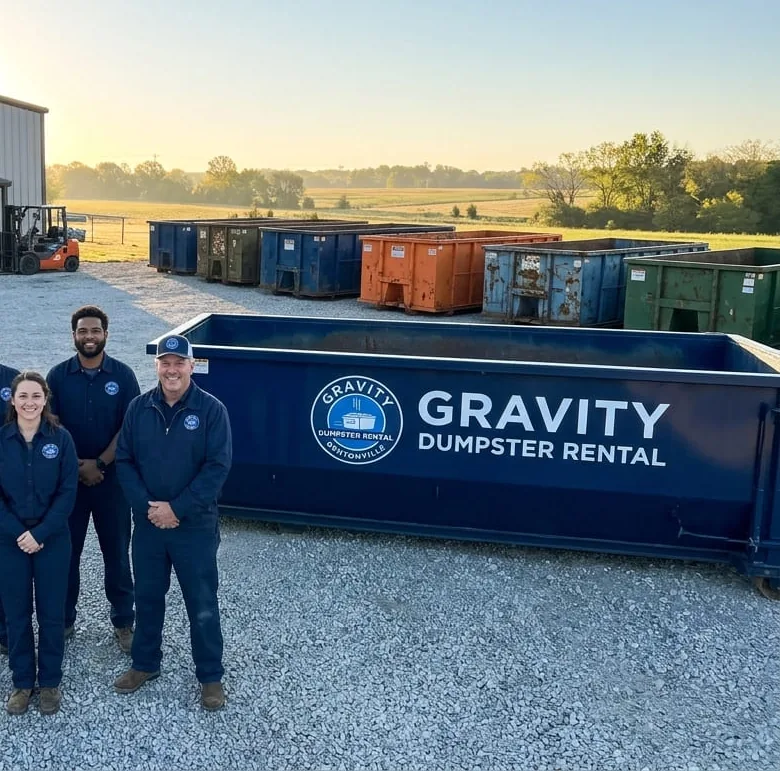
Concrete & Heavy Debris across Northwest Arkansas
Broken concrete, brick, and block are heavy in a way that catches people off guard. A container that still looks nearly empty can already be at its included weight allowance, because this material is far denser than almost anything else that goes into a dumpster. That's the opposite problem from yard waste, which fills up by volume long before it gets anywhere near a weight limit.
Getting the size right for a concrete or heavy-debris job means thinking in tons, not cubic yards. Below is the actual arithmetic, using the density range for broken concrete, brick, and block, so you can see why a smaller container often makes more sense than it looks like it should.
Gravity Dumpster Rental Bentonville has hauled concrete, brick, and block debris across Northwest Arkansas since 2015. Call (479) 364-6780 and describe the job — we'll recommend a size based on the weight, not just the square footage.
At a glance
What you get with concrete & heavy debris
- Priced and sized by weight, not by how full it looks
- Handles broken concrete, brick, block, and asphalt millings
- Flat-rate pricing includes delivery, pickup, and disposal up to the stated tonnage
- Same-day and next-day delivery across Benton and Washington counties
- Right-sized recommendations based on actual load weight
- Licensed and insured, locally owned since 2015
Why Concrete Is Priced by Weight, Not Volume
Broken concrete, brick, and block run roughly 3,000 to 4,000 pounds per cubic yard. Compare that to mixed household or construction debris, which typically runs 200 to 400 pounds per cubic yard. Concrete can weigh ten times as much as the same volume of general debris. Every container size comes with a weight allowance included in the flat rate, and with a material this dense, that allowance gets used up by a small amount of material, not a full load.
The Math: How Little Concrete Fills the Weight Allowance
Take a 10-yard container, which includes a 1 to 2 ton weight allowance. Dividing that weight by the density range for concrete shows how much material actually reaches the limit:
| Weight allowance | Density | Cubic yards to reach the allowance |
|---|---|---|
| 2,000 lb (1 ton) | 4,000 lb per cubic yard | 0.5 cubic yards |
| 4,000 lb (2 tons) | 3,000 lb per cubic yard | 1.3 cubic yards |
That works out to roughly 0.5 to 1.3 cubic yards of broken concrete to hit the included weight allowance in a 10-yard box — somewhere between about 5% and 13% of the container's total volume. Spread across the floor of a 10-yard container, which measures roughly 12 feet by 8 feet, that's a layer only about two to four inches deep. Not half full. Not a few feet of material. A thin layer across the floor is already at the included weight, with the rest of the box still empty air above it.
This is exactly why concrete and heavy debris jobs get sized differently than a general cleanout. The container that looks right for the square footage is often bigger than the job actually needs once weight is factored in.
What Counts as Heavy Debris
Broken concrete, brick, block, and masonry from patios, driveways, sidewalks, and small foundation work are the main materials this container is built for. Asphalt millings and heavy rock behave similarly. Dry soil and dirt run roughly 2,000 pounds per cubic yard on their own, lighter than concrete but still heavy enough to hit a weight allowance fast in any real quantity.
Mixed construction and demolition debris (drywall, framing lumber, flooring, and general renovation waste) is much lighter by volume and usually makes more sense in a demolition debris or construction dumpster instead, sized for volume rather than weight. Roofing shingles are heavy too, but at a different rate than concrete. See the roofing dumpster page for shingle-specific weights.
Choosing the Right Size for a Heavy Load
Because the weight allowance is the limiting factor, most pure concrete or masonry jobs are sized on a 10-yard or 15-yard container rather than something larger, since the extra volume in a bigger box rarely gets used before the weight allowance does. A larger container starts to make sense when concrete is combined with a bigger quantity of lighter debris, or when the job is genuinely large enough to need multiple loads. Weight beyond the included allowance is billed by the ton — call and describe the job, including a rough estimate of the concrete volume, and we'll recommend a size or talk through whether more than one haul makes more sense.
Suitability
Is concrete & heavy debris the right call?
The fastest way to get this right is to check the load against both lists before you book.
Good fits for this container
- Broken concrete driveways, patios, and walkways
- Brick and block from a foundation or wall demolition
- Concrete slab removal
- Asphalt millings
- Heavy rock and fill dirt in modest quantities
- Masonry debris from small demolition projects
Send these somewhere else
- Mixed household or general construction debris (lighter by volume, see demolition debris)
- Large-volume light debris like brush or yard waste
- Full home renovation gut-outs with mixed materials
- Roofing shingles in bulk (different weight rate — see the roofing page)
- Hazardous material of any kind
Sizing
Which container for concrete & heavy debris?
Every size below runs on this service. Match the material to the weight allowance and the volume takes care of itself.
- 10 yard — The standard choice for a driveway, patio, or small slab tear-out — 1-2 tons included, which a modest pile of concrete reaches fast.
- 15 yard — A larger patio or walkway job, or concrete combined with a small amount of other debris. 2 tons included.
- 20 yard — A bigger tear-out or a foundation section, where 2-3 tons of allowance gives more room before hitting the limit.
- 30 yard — Usually reserved for concrete mixed with a larger volume of lighter debris rather than concrete alone — call to talk through the load.
- 40 yard — Rarely the right call for pure concrete given the weight allowance, better suited to mixed loads with more volume and less density; call to discuss.
| Size | Dimensions | Capacity | Weight included | Best for |
|---|---|---|---|---|
| 10 Yard Dumpster | typically about 12 ft long × 8 ft wide × 3.5 ft high | about 3-4 pickup truck loads | 1-2 tons | Bathroom remodels, garage or shed cleanouts, single-room flooring tear-outs and small yard-waste jobs. |
| 15 Yard Dumpster | typically about 16 ft long × 8 ft wide × 4 ft high | about 4-6 pickup truck loads | 2 tons | Kitchen or bath remodels, combined garage and attic cleanouts, small single-layer roof tear-offs. |
| 20 Yard Dumpster | typically about 22 ft long × 8 ft wide × 4.5 ft high | about 6-8 pickup truck loads | 2-3 tons | Whole-house flooring, average-size roof tear-offs, garage demolition, mid-size estate cleanouts. |
| 30 Yard Dumpster | typically about 22 ft long × 8 ft wide × 6 ft high | about 9-12 pickup truck loads | 3-4 tons | Whole-home renovations, large estate cleanouts, new-construction framing waste, commercial buildouts. |
| 40 Yard Dumpster | typically about 22 ft long × 8 ft wide × 8 ft high | about 12-16 pickup truck loads | 4-5 tons | New-construction sites, commercial demolition, major whole-house renovations, large storm debris cleanup. |
Concrete & Heavy Debris — the Northwest Arkansas specifics
The construction boom around Bentonville, Centerton, and Bella Vista generates a steady amount of concrete work: new driveways, patios, and foundations going in, and older ones getting torn out and replaced. The Ozark region's rocky, limestone-heavy substrate also means excavation and foundation jobs here often turn up more rock and heavy fill than a job in softer ground would. Before any digging or excavation connected to a concrete or foundation project, call Arkansas 811 to have underground utility lines marked. It's free and required by state law before you break ground.
Talk to a real person
Need concrete & heavy debris in Bentonville?
Call (479) 364-6780, describe the job in a sentence, and you will get a flat price and a delivery window on the same call.
Mon–Sat 7:00am – 6:00pm · Sun by appointment
Answers
Concrete & Heavy Debris — your questions answered
Why does a 10-yard dumpster only fit a small amount of concrete?
Concrete, brick, and block run about 3,000 to 4,000 pounds per cubic yard, and a 10-yard container includes a 1-2 ton weight allowance. Doing the math, that allowance is reached with roughly 0.5 to 1.3 cubic yards of concrete — a layer only a few inches deep across the floor of the container, even though the box holds 10 cubic yards total.
Can I mix concrete with other demolition debris in the same container?
Small amounts are fine, but a load that's mostly concrete should stay separate from bulky, lighter debris so the weight allowance isn't reached before the container is anywhere near full. Call and describe the mix and we'll recommend how to split the load if needed.
What if my job is bigger than a 10 or 15-yard box can handle for concrete?
Bigger jobs sometimes need more than one haul rather than a larger single container, since a larger box's extra volume doesn't help much once the weight allowance is reached. Call with a rough estimate of the concrete volume and we'll talk through the best approach.
Do you take dirt and rock too?
Yes. Dry soil runs roughly 2,000 pounds per cubic yard, lighter than concrete but still heavy enough that a full container's worth adds up fast. Let us know the mix of material when you call.
Is there an extra charge if a load goes over the weight allowance?
Weight beyond the amount included in the flat rate is billed by the ton. Call for current rates and we'll help you estimate the load so there aren't surprises.
Service area
Concrete & Heavy Debris across Northwest Arkansas
We run roll-off containers out of our 2501 SW Aviation St yard in Bentonville to all seventeen Northwest Arkansas cities we cover — from Bella Vista and Centerton through Rogers and Springdale, out to Fayetteville and the smaller towns around them. Bentonville and the closest towns are usually same-day; the farther edges of the service area are next-day. If your town is not listed, call anyway. We likely still get there.