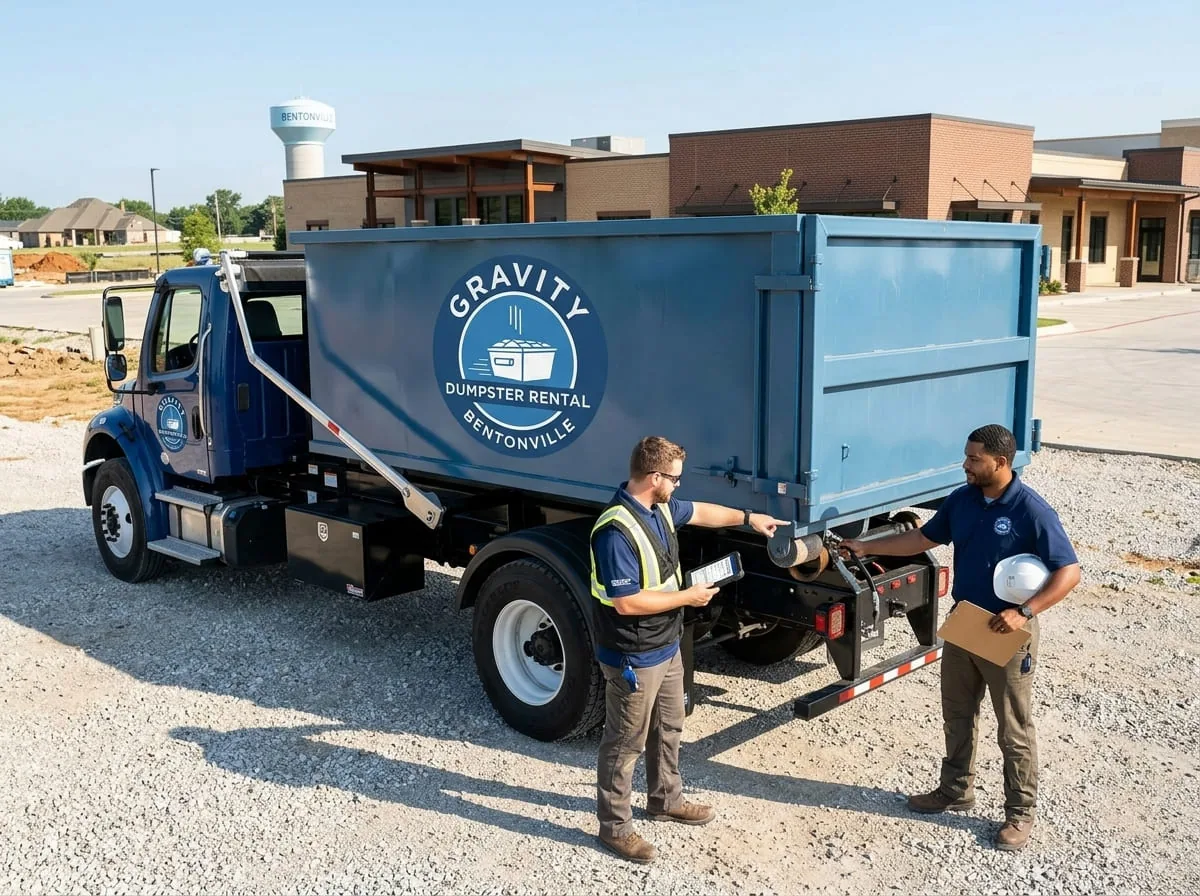
A roll-off dumpster makes quick work of a renovation, a roof tear-off, or a garage that turned into a storage unit for things nobody wants anymore. But not everything that fits in a dumpster is legally allowed to ride in one, and finding that out after the container is already loaded costs more than a phone call would have. When a hauler finds something that should not be in a load, it gets pulled out, and the extra sorting and disposal work almost always shows up as a charge on the final invoice.
This guide covers what is genuinely allowed and prohibited in a roll-off dumpster in Arkansas, based on the state's actual solid waste rules rather than a list written for a stricter state and copied everywhere. Arkansas's disposal rules are comparatively straightforward next to states like Massachusetts or California, so this sticks to what can be confirmed instead of guessing at bans that do not exist here. A short list of materials is prohibited from any landfill in the country because federal hazardous-waste law says so, and a few others need separate handling because of how Arkansas manages tires, electronics, and appliances that contain refrigerant.
Who Regulates What Goes in a Dumpster in Arkansas
Solid waste disposal in Arkansas falls under the Division of Environmental Quality, the agency that handles environmental regulation as part of the Arkansas Department of Energy and Environment. The division was reorganized under that structure in 2019; older references to "ADEQ" point to the same agency and the same rules. DEQ sets the standards that permitted landfills across the state operate under, including what those facilities are and are not allowed to accept, and it runs the state's household hazardous waste collection program for material that cannot go in with regular trash or debris.
Locally, disposal also runs through whatever landfill or transfer station a hauler is permitted to use, and individual facilities can be more particular than the state minimum. That is part of why an experienced local hauler is worth using instead of guessing on your own. If you are not sure whether something specific is fine, our FAQ page covers the questions we hear most, or you can call before you load it.
What You Can Load Without a Second Thought
Most of what comes out of a normal renovation, cleanout, or new build is completely fine in a roll-off. General household junk, including furniture, mattresses, cabinetry, old carpet, and boxes of things nobody has opened in years, is standard fare for a residential dumpster rental or a straightforward junk removal job.
Construction and demolition debris is just as routine: wood framing, drywall, flooring, trim, cabinetry, roofing material, siding, and similar building material all go in a construction dumpster without any special handling. Full teardown jobs that generate a mix of structural material, insulation, and finish debris fall under demolition debris removal, and that is normal too.
Heavy material like broken concrete, brick, block, and asphalt is allowed, but it needs its own container because of weight, not because it is prohibited. A 10-yard box only carries 1 to 2 tons of debris weight, and broken concrete or brick runs 3,000 to 4,000 pounds per cubic yard, so a load of heavy debris hits its weight allowance with just a few inches of material across the floor of the box, nowhere close to full. That is why concrete and heavy debris gets its own dumpster sizing instead of sharing space with a general cleanout load.
What Is Never Allowed: Hazardous Materials Banned From Every Dumpster and Landfill
A short list of materials is prohibited from any dumpster or landfill anywhere in the country, Arkansas included, because federal and state hazardous-waste law treats them differently from ordinary trash. These are not judgment calls or facility preferences; they are the items DEQ specifically routes to its household hazardous waste program instead of the regular landfill stream:
- Paint, solvents, and thinners: dried-out latex paint can sometimes go out as solid waste, but oil-based paint, solvents, and thinners need a hazardous waste drop-off.
- Fuel, motor oil, and other automotive fluids: gasoline, diesel, used motor oil, antifreeze, and similar fluids require dedicated recycling or hazardous waste handling.
- Propane tanks and other pressurized cylinders: these are a fire and explosion risk in a compactor or landfill and are never allowed loose in a dumpster.
- Asbestos-containing material: found in some older siding, floor tile, and insulation; it requires specialized abatement and disposal, not a standard roll-off.
- Pesticides and herbicides: like paint and solvents, these go through household hazardous waste collection rather than the trash.
- Medical and biohazard waste: needles, medications, and anything contaminated with bodily fluids need dedicated medical waste disposal, never a household dumpster.
If any of these turn up on a job, such as an old can of solvent found while clearing a garage or a propane tank left behind in a shed, set it aside and ask about the nearest household hazardous waste collection point rather than tossing it in with everything else. Most Arkansas counties run at least periodic collection events for these household quantities, and DEQ keeps an updated list of active sites and accepted materials.
Refrigerators, freezers, window air conditioners, and dehumidifiers usually contain refrigerant, still commonly called Freon even though most newer units use a different blend. Federal law requires that refrigerant be recovered from an appliance before it is scrapped or landfilled — this is not an Arkansas-specific quirk, it is an EPA requirement that applies everywhere in the country. The final party in the disposal chain, whether that is a landfill or a scrap recycler, has to be able to show the refrigerant was recovered before the unit goes any further.
In practice, that means an old refrigerator or window unit usually cannot just get tossed in a roll-off and forgotten. Whoever removes it needs to know whether the refrigerant has already been reclaimed, and if it has not, that step needs to happen first. When you are booking a dumpster for an estate cleanout or any job that includes old appliances, mention them up front so the reclaim step gets handled correctly instead of turning into a problem once the load reaches the landfill scale.
Tires: Arkansas's Waste Tire Program and Why They Get Sorted Out
Tires are handled separately from general debris in Arkansas because of the state's waste tire program, administered by DEQ under Arkansas Code and its related regulations on waste tire sites and tire handlers. The program's goal is straightforward: keep tires out of landfills and unauthorized waste tire piles, and route them toward recycling or approved beneficial use instead. DEQ's Tire Accountability Program page has the current forms and regulations for anyone handling tires at scale.
For a homeowner or contractor filling a roll-off, the practical takeaway is simple: do not count on tires riding along with a general debris load. Most haulers either exclude tires from a standard load or handle them as a separate line item, often routed through a tire retailer or a county collection event instead of the landfill. If a job is going to generate tires — clearing out a garage, a farm cleanup, a shop closing down — mention it when you book so it gets planned for instead of discovered mid-load.
Batteries, Electronics, and Other Items That Need a Separate Trip
A few other everyday items are not always a hard prohibition the way paint or propane is, but they are still better handled through recycling instead of a dumpster, both because it is better for the environment and because many facilities restrict them anyway. Household batteries and vehicle batteries contain metals and chemicals worth recovering, and most auto parts stores and hardware stores take them for free. Electronics — televisions, computers, monitors, and similar e-waste — often contain the same kind of material, and DEQ periodically coordinates electronics recycling collection events around the state in partnership with local governments.
None of this is usually the kind of ban that gets a load rejected outright, but it is worth sorting out before loading a dumpster rather than after. A facility that would otherwise take a mixed load may still reject or charge extra for a container full of batteries or old electronics, so setting them aside for a recycling drop-off keeps a job moving without a surprise fee.
Quick Reference: What Goes Where
The table below summarizes what is covered above. When something you are dealing with is not listed here, the safest move is to ask before loading it, since a quick question is a lot cheaper than a pulled load.
What Happens When a Prohibited Item Turns Up in Your Load
Landfills and haulers check what comes off a truck, and a prohibited item does not just get waved through. When something like a propane tank, a can of solvent, or a tire shows up in a load that is supposed to be general debris, it gets pulled out during unloading or inspection. That pulled item then needs its own disposal path, which means separate handling, sometimes separate transport, and separate cost — and that cost typically gets passed back to whoever rented the container.
This is the main reason a quick conversation before loading saves money. If there is any doubt about an item, whether it is an old can in the back of a garage or an appliance that has sat unused for years, ask before it goes in the box, not after. Our FAQ page answers the questions we hear most often, and you can always get in touch before a job starts rather than sorting out a contamination charge afterward.
Picking the Right Container for a Clean, Compliant Load
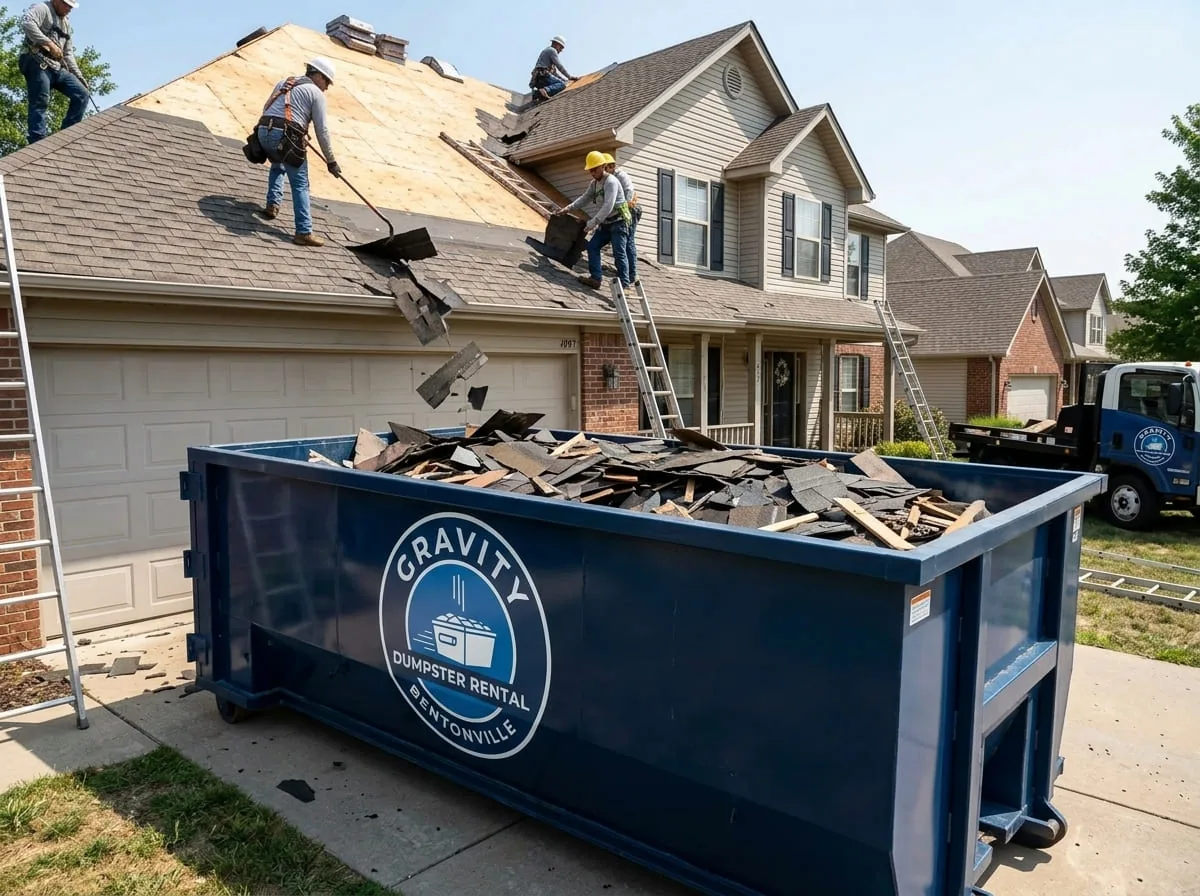
Matching the dumpster to the job goes hand in hand with keeping the load compliant. A full roof tear-off generates heavy shingle debris that behaves more like the concrete example above than a light cleanout load — see our roof tear-off dumpster guide for how that weight math works. A whole-house renovation that mixes drywall, flooring, cabinetry, and fixtures is a different animal, covered in our home renovation debris guide.
For sizing, our dumpster size guide breaks down the full lineup, and a mid-size 20-yard dumpster covers most single-project renovation and cleanout jobs without over-ordering. Whatever the project, telling us what is actually going in the container when you book — appliances, tires, anything questionable — is what keeps the job moving without a pulled load or a surprise charge at pickup.
We have rented to Northwest Arkansas homeowners and contractors since 2015, and part of doing this job right is helping customers avoid disposal problems before they happen. If you are not sure whether something in your load needs special handling, call (479) 364-6780 and ask — we would rather answer up front than sort it out at the landfill.