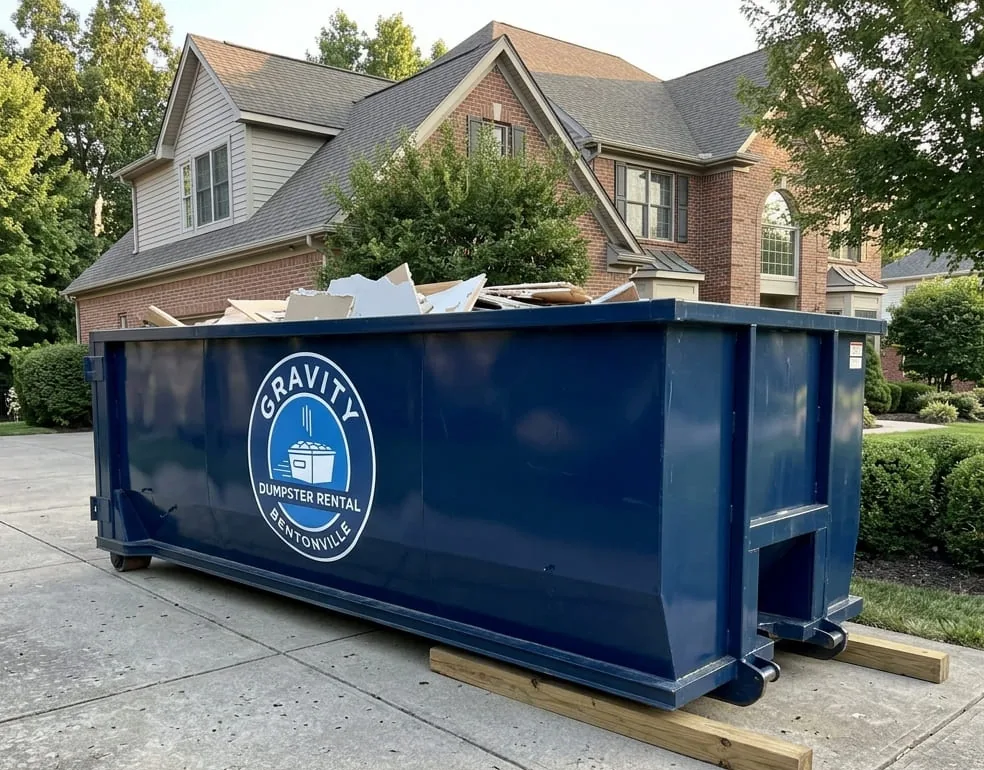
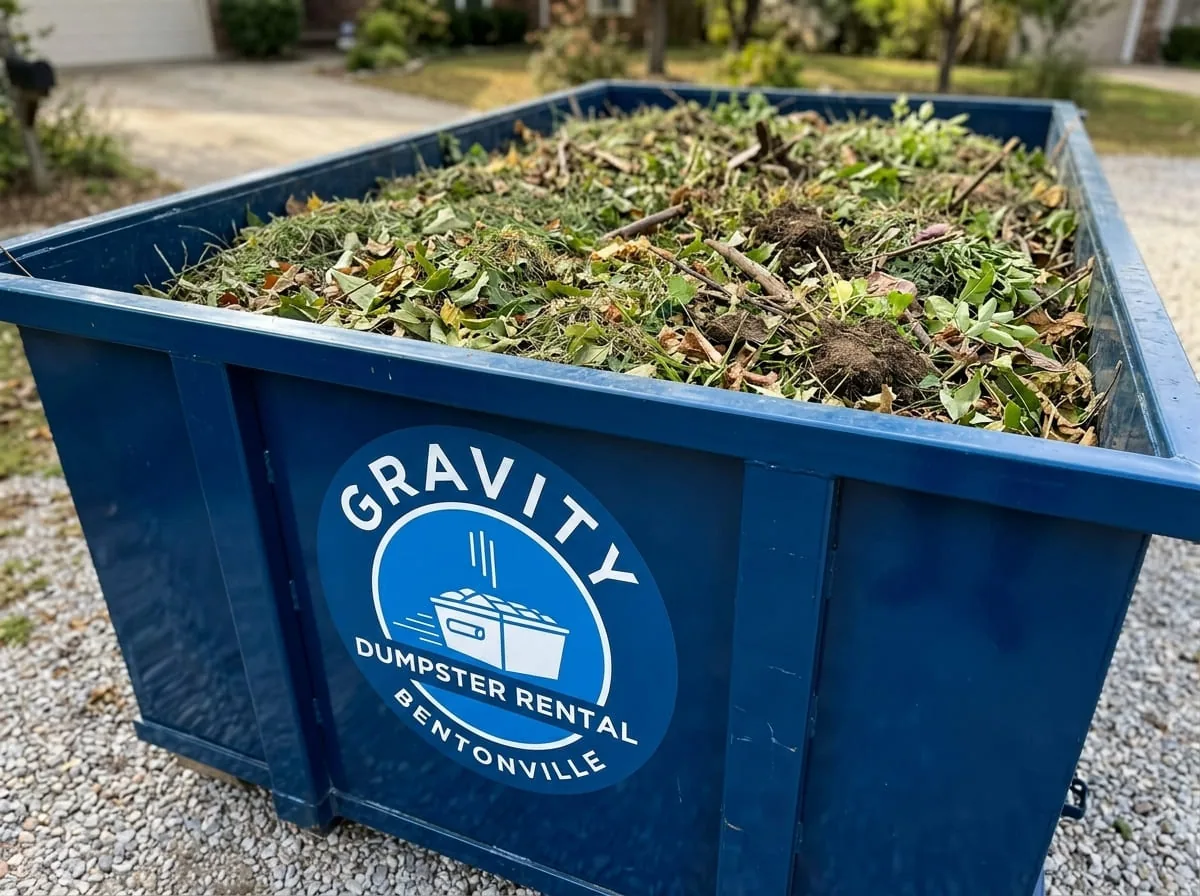
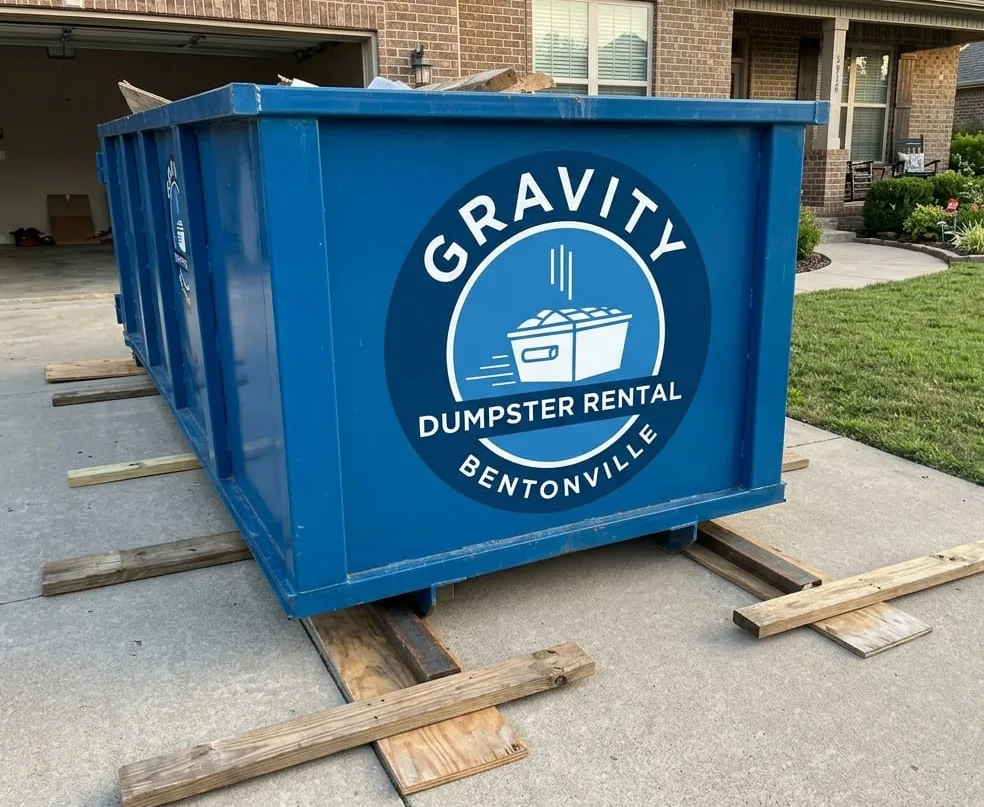
A renovation almost never produces one kind of debris. Rip out a kitchen and you get plywood cabinet boxes, laminate or stone countertop slabs, old appliances, and a layer of flooring underneath that nobody thought about until the cabinets were gone. Renovation debris mixes heavy and light, dense and bulky, and getting the container size wrong in either direction costs money — too small means a second haul, too big means paying for space that never gets filled.
This guide walks through what typical Bentonville-area renovation projects actually generate, room by room and project type by project type, using the same weight and volume figures that apply across every job we run in Northwest Arkansas.
What a Renovation Actually Sends to the Curb
Renovation debris behaves differently than a straight teardown. A full demolition is mostly structural material in fairly predictable proportions. A renovation is selective — you are pulling specific finishes and fixtures out of a house that is otherwise staying put, so the debris mix depends entirely on which rooms and materials are involved. A cosmetic refresh generates very little. A gut renovation down to the studs in a kitchen or bathroom generates a genuinely heavy, dense load in a small footprint.
The EPA's national data on construction and demolition debris puts renovation work in the same broad material categories as new construction and demolition — wood, drywall, concrete and masonry, metals — just in different ratios. That is exactly why a single flat "dumpster size for a remodel" answer does not hold up; a bathroom gut and a whole-house flooring tear-out both count as renovation debris but load a container in very different ways. In Arkansas, solid waste disposal is regulated through the Division of Environmental Quality's Office of Land Resources, which oversees how construction and demolition material is landfilled across the state.
Kitchen Remodels: Cabinets, Countertops, and Why Stone Changes the Math
Cabinet boxes, doors, and trim are bulky but light — they eat volume fast without adding much weight, closer to the 200 to 400 lb per cubic yard range typical of mixed construction debris. Countertops are the opposite problem. Laminate counters are light and stack like the cabinets around them. Stone and quartz counters do not. Broken up, a granite or engineered quartz slab behaves much more like the broken concrete and brick debris in our concrete and heavy debris category than like the cabinetry sitting next to it in the same container.
That distinction matters because our containers carry a tonnage allowance built into the price, not just a volume limit. A 20-yard box that would swallow an entire run of cabinets with room to spare can hit its weight allowance well before it looks full once a stone countertop goes in on top. If your kitchen remodel includes a stone or quartz tear-out, mention it when you call — it is the single biggest weight variable in an otherwise light, bulky kitchen demo, and it can push the right container up a size.
Bathroom Remodels: Tile and Old Fixtures Add Up Fast
Bathrooms are small rooms that punch well above their weight, almost literally. Wall and floor tile, the mortar bed underneath it, and cement backer board are dense material that stacks up close to the same 3,000 to 4,000 lb per cubic yard range as broken concrete and brick. Add a cast iron tub, a stone-topped vanity, and old porcelain fixtures, and a single bathroom gut can carry a surprising amount of tonnage in a small pile.
Run the math: a 10-yard container carries a 1 to 2 ton allowance. At 3,000 to 4,000 lb per cubic yard, that allowance is used up by well under a cubic yard of tile, backer board, and fixture debris — a few inches deep across the container floor, nowhere close to full. This is why bathroom tear-outs pair well with our demolition debris removal service rather than a straight junk-removal approach — the weight profile is closer to structural demo than to household junk.
Flooring Removal: Hardwood, Tile, and Carpet Are Not the Same Job
Flooring is where a lot of remodel estimates go wrong, because "we're pulling up the floors" means something different depending on the material. Solid and engineered hardwood are moderately heavy and add up room by room. Tile and stone flooring fall into that same dense, concrete-adjacent range as bathroom tile — heavy for its footprint even in a single room. Carpet and pad are the opposite: bulky, light, and mostly volume rather than weight.
A whole-house carpet pull generates a lot of volume and comparatively little weight, pointing toward a mid-size container chosen for space rather than tonnage. A whole-house tile pull is the reverse — modest volume that can approach a weight allowance fast. Mixing the two, common in a multi-room flooring update, is exactly when telling us the material breakdown up front gets a more accurate size than guessing off square footage alone.
Whole-House and Multi-Room Renovations
Once a project spans more than one or two rooms, the debris stream stops being one material and becomes a genuine mix — kitchen cabinetry and stone, bathroom tile and fixtures, flooring from several rooms, drywall, and trim. These projects usually call for a 20-yard or 30-yard container, and the deciding factor is less "how many rooms" and more how much of the pile is heavy material versus bulky material. A whole-house cosmetic refresh with mostly paint, trim, and light fixtures can run smaller than expected; a renovation with two bathrooms' worth of tile and a stone kitchen countertop needs to be sized around that weight, not around the square footage of the house.
Our residential dumpster rental service is built around exactly this variability — flat-rate pricing that includes delivery, pickup, and disposal up to a stated tonnage, so a homeowner can describe the mix of materials and get a size recommendation instead of guessing. See the full dumpster size lineup for dimensions and weight allowances across all five sizes.
Garage and Basement Cleanouts That Often Ride Along
Renovations rarely stay contained to the rooms being remodeled. A kitchen or bathroom project frequently comes with a garage or basement cleanout attached — years of accumulated storage sorted while the rest of the house is already under construction, or a basement being finished as part of the same project. That debris stream looks like the mixed household category rather than the heavy-material category: furniture, boxed belongings, and general clutter that is bulky rather than dense.
If a cleanout is riding along with your remodel, tell us both parts of the job when you call, since a garage full of light, bulky material and a bathroom full of dense tile debris load a container very differently even at the same yardage. Our estate cleanout and junk removal services handle the cleanout side specifically, and combining that scope with the renovation debris under one container is usually more efficient than running two separate hauls if the timing lines up.
Two Different NWA Renovations: Newer Resale Homes and Older County Homes
Northwest Arkansas renovation work splits into two fairly distinct situations, and both are common around Bentonville. The first is a newer home, often built within the last fifteen to twenty years during the region's growth boom, being updated for resale — swapped countertops, refreshed flooring, updated fixtures. These homes tend to produce a cleaner, more predictable debris stream because the existing materials are more uniform and there is less structural surprise once demolition starts.
The second is an older home out in Benton County — a farmhouse, a mid-century ranch, an older in-town property — being modernized room by room. These jobs turn up more variety: older plaster in place of drywall, multiple layers of flooring stacked from past updates, and fixtures built heavier than modern equivalents. A resale-focused update on a newer home can often be sized close to the material list alone; an older county home is worth budgeting some size cushion for what turns up once the walls and floors are opened.
Keep Loads Clean: Separate Heavy From Bulky When You Can
The single most useful habit on a renovation job site is keeping heavy, dense material separate from light, bulky material as it comes out, rather than piling everything together. Tile, stone, tub, and backer board in one area; cabinetry, trim, drywall, and packaging in another. This makes sizing far more accurate than eyeballing a mixed pile, and on jobs with enough heavy material — a bathroom gut plus a stone countertop, for example — it opens the option of a smaller container sized around the tonnage of the heavy load, run separately from a larger container for the bulky cabinetry and trim, rather than one oversized box carrying both.
Source separation like this is also the practice the EPA points to in its guidance on sustainable management of construction and demolition materials, where keeping material streams distinct is what makes recycling and reuse of concrete, tile, and metal practical. On a smaller scale, it is also just good project management — a job site with heavy debris staged separately from bulky debris is easier to load correctly the first time.
Matching Container Size to Your Renovation Project
The table below lines up common renovation and remodel scopes with the container size that typically fits, based on the same dimensions and weight allowances used across every size we offer. Treat the "typical debris" column as a starting point — the newer-home-versus-older-home distinction above, and how much stone or tile is involved, can move a project up a size in either direction.
If your project sits between two rows — say, a kitchen with laminate counters but heavy custom cabinetry, or a bathroom remodel bundled with a basement cleanout — call and describe the actual materials rather than guessing from the table alone. A five-minute conversation about what is coming out of the house gets a more accurate size than any general table can.
Placement, Timing, and Getting the Right Container Delivered
Renovation projects usually run longer than a single-day cleanout, which makes driveway placement worth planning up front — where the container sits for the project, how it affects contractor access, and whether it needs swapping partway through a multi-week job. We serve Bentonville, Bella Vista, Centerton, and the surrounding Northwest Arkansas communities at the same flat rate — delivery, rental period, pickup, and disposal included up to the stated tonnage, with same-day and next-day delivery available for renovation projects ready to start.
Renovation debris is rarely a mystery once you break it down by room and material rather than sizing the whole project at once. Kitchens are bulky until stone gets involved. Bathrooms are small rooms that carry real weight. Flooring depends on what is underfoot. And whether you are updating a newer home for resale or modernizing an older property out in the county changes what turns up once demolition starts.
Call (479) 364-6780 and walk us through your project — which rooms, what materials, and whether a cleanout is riding along — and we will size the container to match, or reach out through our contact page for details on availability in your area.